Showing posts with label stories. Show all posts

Monday, April 8, 2013

"When She Is Old and I Am Famous" by Julie Orringer, Plus "Misery" by Anton Chekhov

"But perhaps by then we will love ourselves less fiercely." (Orringer, 45)

     "Iona looks at his fare and moves his lips... Apparently he means to say something, but nothing comes out but a sniff. 
     "What?" inquires the officer. 
     "Iona gives a wry smile, and straining his throat, brings out huskily: "My son..., er... my son died this week, sir."  (Chekhov)


These two stories don't go together. It's just that I read them at the same time. Also, I'm feeling erudite and studious enough to attempt a connection. 

Guys, I had an insight. Who knows how long it will last, but it feels monumental.

I have been thinking intently about truth as a motivation for writing, and as a source of conflict. In my own writing, I always struggle with figuring out what has to happen to a character over the course of a story to bring that character, or the reader, some deeper understanding. It feels like a plotting problem. When I re-plot, when I think I've got something figured out because it makes sense the way the plot of an episode of Law & Order makes sense, I'm so proud of myself for a minute. Then I try to write it, and half way through, it fails. I'm not saying what I mean to say. 

It occurred to me this week, as the plot problem happened again, and I thought I'd solved it, that it is not a plot problem I have at all. I have a vision problem. I have a problem understanding what I think the ultimate stake is in any conflict and in knowing what, for me, starts the fires of tension and conflict raging in the first place. 

As soon as I knew I had the problem, I had the answer, too. To me, it's always a character's inability to say what she really means to say, always his inability to hold onto the little kernel of truth he knows, that sets any conflict going. 

And it is our inability to tell and believe any static truth, the encounter with knowing that as soon as we put words to something it's bullshit, it's never the whole picture, that is the reason I write. All we have are different changeable versions of stories, but having to change them all the time, having to admit their truth and their falsity, their inevitable inadequacy and their inevitable beauty all at the same time-- that is the most dramatic thing in the world. 

"When She Is Old and I Am Famous" and "Misery" were the first two stories I read after my realization. They are test cases for the questions, "Is this really how I see all stories?" and "Is this the most helpful, clarifying, propulsive way of seeing my own stories?" I think it is, for my own stories at least, and I think, even if I am reading things into other stories by applying my theory, that the activity will teach me more about craft than will going in with the same stale set of tools I'm carrying now. 

I am so excited to have something fresh. (Can you tell?)

I was re-reading Orringer's story because I'm teaching it in class, and it's perfect and engaging for high-school seniors. I was surprised at how much I still like the story, and pleased that my ideas about truth being the source of conflict helped me understand the events of the story in a new way. 

 Mira, the twenty-year-old art student who tells the story, is caught firmly in a static and opposing vision of herself-- fat, smug, never good enough-- and her younger cousin, Aïda-- thin, beautiful, miraculous. Her problems, her perceived conflicts and tensions, all stem from this problematic, but comfortable vision of herself and who she is in the world. It's opposed to her vision of Aïda, sure. There's enough conflict around this version of truth to keep things interesting before Mira's version of the truth breaks down. Everything that happens confirms Mira's vision of things until she is literally injured by her cousin's lies. After she breaks her ankle, her vision of Aïda breaks, too. In a moment when they're both vulnerable, Aïda is able to say what she is afraid of, and Mira is able to believe her.

This isn't where it ends though. There's true connection here, some kind of new understanding, but even when it gets good for Mira at the end, when she's sold a painting and her cousin is gone, there's never the empty promise that she and Aïda will understand each other for good now. It's only that the possibility is there, where at the beginning the only possibility for Mira was to stick with the same old story, the one version of truth it's safe to believe because everyone confirms it. 
 
After I read Orringer, I read Chekhov because I was thinking last night about the encroachment of the body and nature, and because the Big Daddy of the short story, the one who makes me cry in just a few pages, seemed like an important test. The first Chekhov I came across in my classroom, a Constance Garnett translation in a textbook, was “Misery,” not my favorite, but I at least like all of his stories, so I read it.

“Misery” exemplifies another way that truth and our inability to tell it is at the root of conflict. Here, Iona, the cab driver, doesn't have a version of truth that is de-stabilized in the action of the story itself. It's been de-stabilized before we meet him; his son has died quickly and senselessly after three days in the hospital. His struggle is how to say the new truth and how impossible it is to say at all, let alone to an inhospitable world that won't listen. “He feels it is no good to appeal to people,” Chekhov writes. And it is no absolute, permanent, completely fulfilling good. It will be imperfect and go away. But telling stories, sharing that incompleteness is all we have.
 
“He cannot think about his son when he is alone... To talk about him with someone is possible, but to think of him and picture him is insufferable anguish...”


Sunday, October 14, 2012

"Walker Brothers Cowboy" by Alice Munro

"Under the arms her dress is a little damp, and little drops form along her upper lip, hang in the soft black hairs at the corners of her mouth" (16). 


I looked back at this story on a whim Friday morning-- Friday, a day off, which I am still profoundly grateful for. I spent the day writing a new piece that started running through my mind at the beginning of the month (but really, as with most of what I write) has been running through my mind and in strands of things I've written for years and years. Something told me to return to Munro. I'd started writing with an older narrator in mind, but I want to travel back in time, too, to the things she recalls and the ways they still affect her, and Munro is a perfect text to study for how to deal with memory. 

She has so many stories that are written in present-tense, but are truly about a vividly remembered past. Walker Brothers Cowboy is one. The narrator is eight or nine; it is the 1930s in Canada; her family is poor. But the memory is so strong, so vivid, that the piece begins: "my father says," "We leave my mother" (3). About halfway through, the story-teller breaks through the immediacy of the past with, "The 1930s. How much this kind of farmhouse, this kind of afternoon seem to me to belong to that one decade in time, just as my father's hat does, his bright flared tie, our car with its wide running board (an Essex past its prime)" (9). It is not that the story is happening now, but that it is happening in this narrator's consciousness now, as she remembers and can put language to the things she perceived as a child but could never have said then.

The story is about her father, the mystery of him. It's very similar to Royal Beatings in theme an execution, though not so brutal. The narrator and her brother go with their father on his Walker Brothers route through the country, and they wind up at an old farmhouse where there father knows a Catholic lady. It's clear the father was involved with the woman in the past, but not clear what he's trying to get out of the visit, or what he's trying to share with his kids or the woman, Nora, by bringing his past and present together in an old kitchen with a scrubbed oilcloth-covered table. Nora dresses up for her visitors, serves their father whisky, and she dances. The line above, where the narrator notices the imperfections of Nora's body, seem to me the lines that make Nora human and real, and consequently, everyone else in the story begins to carry the same kind of mysterious dignity. 

I like to think she might have danced with the children's father in a place like the one above. Also, I think this Walker Evans' portrait captures her essence.  

I also noticed the ending on this read, and how Chekhovian Munro can be. She gestures outward, shows that the inscrutable character and past of the narrator's father is as large and wide as the changeable water and sky: 

"So my father drives and my brother watches the road for rabbits and I feel my father's life flowing back from our car in the last of the afternoon, darkening and turning strange, like a landscape that has an enchantment on it, making it kindly, ordinary and familiar while you are looking at it, but changing it, once your back is turned, into something you will never know, with all kinds of weathers, and distances you cannot imagine. 

When we get closer to Tuppertown the sky becomes gently overcast, as always, nearly always, on summer evenings by the Lake" (18). 


Tuesday, July 17, 2012

"A Day" by William Trevor

"On the mottled worktop in the kitchen the meat is where Mrs Lethwes left it, the fat partly cut away, the knife still separating it from one of the chops. The potatoes she scraped earlier in the day are in a saucepan of cold water, the peas she shelled in another."

Still Life with Ham by Philippe Rousseau via Metmuseum.org

It is hard for me not to include the final two sentences of Trevor's immaculate story, "A Day", the penultimate piece in his 1996 collection After Rain. The lines are truly heartbreaking, but only if you've woken with Mrs Lethwes first, traveled with her to market and coffee shop, watched her weed the garden, listened to her chat with the housekeeper and to her thoughts. She regrets her childlessness, tries to reconcile herself to her husband's affair. Her anxieties and suppositions assault her, deepen, become murkier, more complex and more urgent as the day turns to night and she prepares Mr Lethwes's dinner.

I first read the story leaning over the kitchen counter, absorbed completely by Mrs Lethwes's unease. At the last two lines I cried even though I didn't want to. It's as high a recommendation as I can give any story, and I won't try to explain the reaction away. 

But, for craft's sake, I think it's safe to say that my reaction to the end (and I know it's not unique) has to do with the completeness of our immersion in Mrs Lethwes's consciousness, the steady revelation of her regrets and hopes, and with the stunning point-of-view shift, the sudden, dramatic bloom at the very end.  

I feel so lucky to have witnessed it.

Powell's, Amazon, Google Books


P.S. Thanks to Sarah, Aaron, and Jane for introducing me to Trevor. 
P.P.S. Jhumpa Lahiri reads "A Day" for the New Yorker fiction podcast

Monday, July 9, 2012

"Royal Beatings" by Alice Munro

"The person who spoke these words and the person who spoke to her as her father were not the same, though they seemed to occupy the same space. It would be the worst sort of taste to acknowledge the person who was not supposed to be there; it would not be forgiven. Just the same, she loitered and listened. The cloud-capped towers, she heard him say once. 'The cloud-capped towers, the gorgeous palaces.' That was like a hand clapped against Rose's chest, not to hurt, but astonish her, to take her breath away" (4). 


This is a favorite quote from a favorite story from a favorite collection, Alice Munro's The Beggar Maid. (The title comes from this legend and painting.) "Royal Beatings" especially is a story I return to again and again. Frankly, it deserves more than one post.

For today, I am enthralled by how accurately the story portrays our inability to fully know one another, and in particular, our great difficulty in knowing our parents, whose person-hoods are often eclipsed by roles. 
Rose senses role changes in her parents and other adults as a child and eloquently recalls her thoughts and feelings as an adult. 

Her father is a quiet man who repairs furniture and recites poems. He is also king of the royal beatings, "his face like his voice [...] quite out of character" (19). Her stepmother, Flo, is the woman who sets the royal beating in motion by goading her, and she is the woman who pleads with her husband not to whip so hard, the woman who rubs cream on Rose's back and brings her a special meal when everything is over. The neighbor, Becky Tyde, is an elegant yet physically mangled dwarf, a daily presence at Flo's store but also the subject of horrendous town rumors. 

In this story, everyone's a mystery. The mystery never redeems the violence, but it allows us to see how the characters co-exist with it, how they miraculously survive, manage love and joy. In a scene near the end, Flo does tricks with her double-jointed arms. The family looks at the stars. "The planet Venus!" Rose's father says, applauding Flo. "Ten thousand electric lights!" (24).

my 1982 Bantam mass-market copy

P.S. The line Rose's father recites is from Shakespeare's The Tempest. 

Propspero:              "The cloud-capped towers, the gorgeous palaces, 
                                The solemn temples, the great globe itself. 
                                Yea, all which it inherit, shall dissolve, 
                                And, like this insubstantial pageant faded, 
                                Leave not a wrack behind." (4.1)

Monday, June 25, 2012

"No One's a Mystery" by Elizabeth Tallent

"'I'm not wrong,' he said. 'And her breath would smell like your milk, and it's kind of a bittersweet smell, if you want to know the truth.'"


Elizabeth Tallent's very short story (it's under 1000 words) "No One's a Mystery," is like Chekhov's "Gusev" for me because it's the ending, the final sentence, that catapults the piece to a place that feels at once surprising and inevitable. I would like both stories without their final sentences, but not nearly so much. 

Tallent's final line, spoken by Jack to his eighteen-year-old lover as they careen down the highway hiding from his wife, pushes the dramatic irony to new heights and reverses our expectations. We want to believe that his lover is right, that in a year they'll be married, have children, still be in love. It's pretty obvious Jack's not the greatest guy for her, but we're in her point-of-view. She's so powerless, hiding under the seat with Jack's hand on her head, and so idealistic. Wouldn't it be nice?

By the end, we've realized the only really nice thing about Jack is that he understands the relationship has to end, that he really does believe his version of the story and has good reasons to. He has experience. He knows the breath of an infant won't smell like vanilla, that this girl will forget him. As readers, we know what both characters believe, and know, too, that they can't believe one another. 

The story's length also reminds me that in great writing every word is used, that we don't always need many words to do a lot. 


Sudden Fiction is a great anthology full of literary short-shorts—lots of big names with pieces on writing at the end. You can also read Tallent's story online. And here's the Roseanne Cash song ("It Hasn't Happened Yet") they're listening to, sung by Rick Nelson and Roseanne herself. 

Saturday, June 23, 2012

"How to Tell a True War Story" by Tim O'Brien

"How do you generalize?
     War is hell, but that's not the half of it, because war is also mystery and terror and adventure and courage and discovery and holiness and pity and despair and longing and love. War is nasty; war is fun. War is thrilling; war is drudgery. War makes you a man; war makes you dead."


I've been thinking about O'Brien's "How to Tell a True War Story" (the seventh piece in the collection/novel The Things They Carried) because I've been thinking about teaching. How do you explain that successful works of art combine resolution, a feeling of completeness, with irresolution, the sense that some other alternative, a wolf with great teeth or the ghost of a murderous white whale, waits just outside the door? We can say, "It is both ways, many ways, never one," but that is only a rule, a generalization, useful, but abstracted instead of actual. 

O'Brien's story gives us the generalizations paired, and that helps. It engages the mind's logic, the drive toward inquiry. How do you generalize? How do you tell a true war story? How do you tell any true story? It's the piece's main line of tension. As we read, we think we may come closer to an answer. We also get more pieces of the dramatic war story interspersed with the speaker's attempt to answer questions, but we know the essentials very early on: Rat Kiley's best friend "gets killed" (75). 

But that line doesn't say what's essential, and alone, no line in the story can. No single line any writer could pen would capture it. It needs to be told over and over again: "You can tell a true war story by the way it never seems to end. Not then, not ever" (83). 

Monday, June 4, 2012

"Gusev" by Anton Chekhov

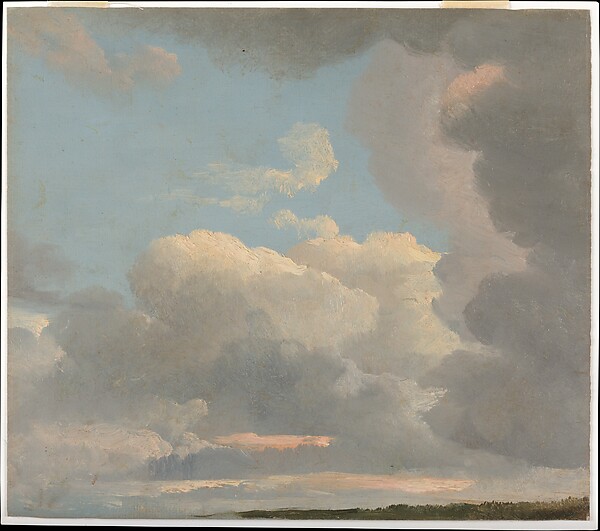
"Seeing this magnificent, enchanting sky, the ocean frowns at first, but soon itself takes on such tender, joyful, passionate colors as human tongue can hardly name." (Pevear & Volokhonsky trans.)

"Gusev" is one of my very favorite stories, and its final line (above) reliably produces in me as much awe, wonder, and sheer happiness as staring up at a snow-capped peak or a black sky loaded with stars. Of course, I have to read the rest of the story first. It chronicles the last days of two soldiers in a ship's sick bay and is full of pitch-perfect psychological insights, but what makes the story truly special are the moments when Chekhov leaves the real world and shocks us with a healthy dose of wonder.

When Gusev dies we follow his body as it is sewn up in canvas and he "comes to resemble a carrot or a black radish" (Virginia Woolf liked this line too). The other soldiers prepare to throw him into the waves. "Can it really happen to anyone?" the story asks. Gusev is borne down by the current, but as he descends he "sways rhythmically, as if pondering, and, borne by the current, drifts more quickly sideways than down." He meets some pilot fish and a shark. Both are cruel, but we don't judge them for it the way we judged the men on the ship. It is simply their nature. Above, the sky puts on a show: "one cloud resembles a triumphal arch, another a lion, a third a pair of scissors... A broad green shaft comes from behind the clouds and stretches to the very middle of the sky..." And just like me, the ocean is skeptical at first, "frowns," "but soon itself takes on such tender, joyful, passionate colors as human tongue can hardly name."