Sunday, October 14, 2012

"Walker Brothers Cowboy" by Alice Munro

"Under the arms her dress is a little damp, and little drops form along her upper lip, hang in the soft black hairs at the corners of her mouth" (16). 


I looked back at this story on a whim Friday morning-- Friday, a day off, which I am still profoundly grateful for. I spent the day writing a new piece that started running through my mind at the beginning of the month (but really, as with most of what I write) has been running through my mind and in strands of things I've written for years and years. Something told me to return to Munro. I'd started writing with an older narrator in mind, but I want to travel back in time, too, to the things she recalls and the ways they still affect her, and Munro is a perfect text to study for how to deal with memory. 

She has so many stories that are written in present-tense, but are truly about a vividly remembered past. Walker Brothers Cowboy is one. The narrator is eight or nine; it is the 1930s in Canada; her family is poor. But the memory is so strong, so vivid, that the piece begins: "my father says," "We leave my mother" (3). About halfway through, the story-teller breaks through the immediacy of the past with, "The 1930s. How much this kind of farmhouse, this kind of afternoon seem to me to belong to that one decade in time, just as my father's hat does, his bright flared tie, our car with its wide running board (an Essex past its prime)" (9). It is not that the story is happening now, but that it is happening in this narrator's consciousness now, as she remembers and can put language to the things she perceived as a child but could never have said then.

The story is about her father, the mystery of him. It's very similar to Royal Beatings in theme an execution, though not so brutal. The narrator and her brother go with their father on his Walker Brothers route through the country, and they wind up at an old farmhouse where there father knows a Catholic lady. It's clear the father was involved with the woman in the past, but not clear what he's trying to get out of the visit, or what he's trying to share with his kids or the woman, Nora, by bringing his past and present together in an old kitchen with a scrubbed oilcloth-covered table. Nora dresses up for her visitors, serves their father whisky, and she dances. The line above, where the narrator notices the imperfections of Nora's body, seem to me the lines that make Nora human and real, and consequently, everyone else in the story begins to carry the same kind of mysterious dignity. 

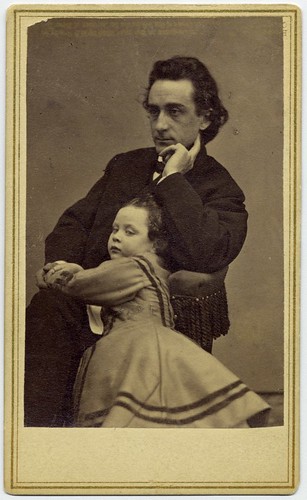
I like to think she might have danced with the children's father in a place like the one above. Also, I think this Walker Evans' portrait captures her essence.  

I also noticed the ending on this read, and how Chekhovian Munro can be. She gestures outward, shows that the inscrutable character and past of the narrator's father is as large and wide as the changeable water and sky: 

"So my father drives and my brother watches the road for rabbits and I feel my father's life flowing back from our car in the last of the afternoon, darkening and turning strange, like a landscape that has an enchantment on it, making it kindly, ordinary and familiar while you are looking at it, but changing it, once your back is turned, into something you will never know, with all kinds of weathers, and distances you cannot imagine. 

When we get closer to Tuppertown the sky becomes gently overcast, as always, nearly always, on summer evenings by the Lake" (18). 


Sunday, October 7, 2012

The Story of Lucy Gault by William Trevor

"She should have died a child; she knows that but has never said it to the nuns, has never included in the story of herself the days that felt like years when she lay among the fallen stones. It would have lowered their spirits, although it lifts her own because instead of nothing there is what there is" (227).


This line is from the end of William Trevor's short 2002 novel The Story of Lucy Gault. Lucy should indeed have died as a child, but she lives, a little ghost-like, waiting for her parents to return. 

The plot is fantastically intriguing, the kind of story that would sell magazines or end up as a Lifetime movie or a 48 Hours news special. It's the early 1920's in Ireland. Lucy is nine and lives with her parents at Lahardane, the family estate. Irish nationals try to burn it down one night. The dogs are poisoned. Captain Gault, Lucy's father, shoots one of the young men. He tries to apologize, but the family must leave. Lucy's mother is English, and they decide to return there. The day before the move, Lucy  runs away and hides in the woods. She breaks her leg and cannot return. Everyone believes she's drowned in the sea. Her parents leave, broken-hearted, and vow never to return. 

Lucy survives and is eventually found, but her family is long-gone, and each day, it seems a little less certain they will ever return. 

Trevor writes from the points-of-view of Lucy, her parents the care-takers who find her, the lawyer who searches for the Gaults once Lucy is found, and the young man who eventually falls in love with her. Every character is revealed as possessing an enormous fount of secret love, longing, and regret. Each wants to connect with someone or something that will always remain at least a little bit hidden. Each is acutely conscious that breaks are permanent, that even the most intense relationships are imperfect and incomplete. Their love for one another is the longing kind--mawing, heart-opening wishing that beautifully echoes every human experience of loss. 

Trevor's portrayal of loss is stunning, in part, because of physical things that re-appear, not as symbols, but, more truly, as comforts that draw us back to old times, old loves we never forget. There are hydrangeas in the yard, the old house in the woods, the dark kitchen, and the boiled egg that is Lucy's first meal when she is re-discovered, all beautifully rendered signs of a surprising continuity.

Powell's (with Alice McDermott's Review), Amazon, Google Books

P.S. It's not all mellow, sad-sack longing. The love story is fantastic!

P.P.S. I'm back after months away! I'm engaged, moved, have an M.F.A. and a new job. But I haven't stopped reading. I'll be posting weekly now, every Sunday (Sunday mornings, I hope).


Thursday, August 2, 2012

Delta Wedding by Eudora Welty

"There were moments of life when it did not matter who she was—even where. Something, happiness—with Troy, but not necessarily, even the happiness of a fine day—seemed to leap away from identity as if it were an old skin, and that she was one of the Fairchilds was of no more need to her than the locust shells now hanging to the trees everywhere were to the singing locusts" (40). 


Oh, I am a sucker for a beautiful line, and Eudora Welty's 1945 novel "Delta Wedding" is full of them. I must have marked twenty pages of contenders for my favorite.

The line above comes from Dabney, but the novel wends its way through the consciousnesses of many women of the Fairchild family during the days surrounding her wedding. Shellmound Plantation, Uncle George, Uncle Battle, deceased Uncle Dennis, the Yazoo River, the bayou, the great abandoned house, Marmion, and the Fairchild family itselfall exert inescapable, mysterious influence.

Each woman's encounter with the power of family and place is at the heart of Welty's gorgeous prose and her enduring portrait of the early twentieth-century Deep South. (At least, it's enduring to my mind. I've never been to Mississippi, but if I someday get the chance, I will be hoping for white cotton fields, hot blue skies, rivers with whirlpools, banana plants, crepe myrtles, and enormous old families, big white houses always full of noise.)

There is nine-year-old cousin Laura, whose mother has recently died, desperately wanting to feel part of the Shellmound clan. There is Dabney, gay and rather frivolous, marrying 'beneath' her station, delighting in maintaining and breaking family boundaries. There is her mother, Ellen, a Virginian never been quite at home in Mississippi, pregnant again. There is Shelley, the first daughter, sober and thoughtful with no marriage prospects, unsure of what her life might become. And there is Robbie, Uncle George's wife, who runs away and returns without knowing how to live with the fact that her husband will always put the Fairchilds first.

What I like best is that despite all the family noise, the demands for attention, all the things to be done, each woman portrayed is called by some mystery, some deeper meaning in life, and each finds a place quiet enough to reflect, appreciate, wonder.


P.S. One more line I love, this time from Shelley: "The house was charged with life, the fields were charged with life, endlessly exploited, but the bayou was filled with its summer trance or its winter trance of sleep, its uncaught fishes" (256).

Saturday, July 21, 2012

The Giant's House by Elizabeth McCracken

"Despite popular theories, I believe people fall in love based not on good looks or fate but on knowledge. Either they are amazed by something a beloved knows that they themselves do not know; or they discover common rare knowledge; or they can supply knowledge to someone who's lacking" (10). 

Robert Pershing Wadlow (ca. 1940), the tallest person in history, by Vedia via Flickr

And now for a book that was so much fun to read. McCracken's 1996 (gee, I'm on a roll; next thing, I'll be listening to this, or preferably, this) National Book Award Finalist (and her first novel), The Giant's House, has been on my shelf all year and was highly recommended. 

It was a perfect camping trip readthought-provoking, bittersweet, with an ending that's totally satisfying and doesn't feel like a cop-out. The plot skates along, merrily almost, which is surprising because it's a sad story on the surface. 

We know early that James Sweatt, the eponymous giant, has diedbut Peggy Cort, the librarian who tells the story, is so motivated by love that we never veer into the territory of unmitigated tragedy. Smart, acerbic, closed-off Peggy manages to find a life through her relationship with James and his quirky Cape Cod family, and the only way she can do justice to his memory is to keep on living. 

Peggy's voice is one of the best parts of the novel. She's got lots of gems like the one above. She starts the novel with an affront"I do not love mankind"and from that line forward, I want to know what she'll say next. Also, of course, how a grown woman could fall in love with a teenage giant. McCracken succeeds in developing Peggy's point-of-view so flawlessly though, that it's not creepy in the least. 

I loved that this novel felt like an easy read, but made me think about the nature of love, too. It was interesting to note that in terms of plot and structure, McCracken follows the rules (at least the ones I've heard) and they work beautifully. Major plot turn on page 90 of a 300 page novel: it happens here, at exactly page 90. 


Tuesday, July 17, 2012

"A Day" by William Trevor

"On the mottled worktop in the kitchen the meat is where Mrs Lethwes left it, the fat partly cut away, the knife still separating it from one of the chops. The potatoes she scraped earlier in the day are in a saucepan of cold water, the peas she shelled in another."

Still Life with Ham by Philippe Rousseau via Metmuseum.org

It is hard for me not to include the final two sentences of Trevor's immaculate story, "A Day", the penultimate piece in his 1996 collection After Rain. The lines are truly heartbreaking, but only if you've woken with Mrs Lethwes first, traveled with her to market and coffee shop, watched her weed the garden, listened to her chat with the housekeeper and to her thoughts. She regrets her childlessness, tries to reconcile herself to her husband's affair. Her anxieties and suppositions assault her, deepen, become murkier, more complex and more urgent as the day turns to night and she prepares Mr Lethwes's dinner.

I first read the story leaning over the kitchen counter, absorbed completely by Mrs Lethwes's unease. At the last two lines I cried even though I didn't want to. It's as high a recommendation as I can give any story, and I won't try to explain the reaction away. 

But, for craft's sake, I think it's safe to say that my reaction to the end (and I know it's not unique) has to do with the completeness of our immersion in Mrs Lethwes's consciousness, the steady revelation of her regrets and hopes, and with the stunning point-of-view shift, the sudden, dramatic bloom at the very end.  

I feel so lucky to have witnessed it.

Powell's, Amazon, Google Books


P.S. Thanks to Sarah, Aaron, and Jane for introducing me to Trevor. 
P.P.S. Jhumpa Lahiri reads "A Day" for the New Yorker fiction podcast

Friday, July 13, 2012

"King Lear" by William Shakespeare


Lear:
[...] Now, our joy,
Although our last and least; to whose young love
The vines of France and Milk of Burgundy
Strive to be interest; what can you say to draw
A third more opulent than your sisters? Speak.

Cordelia:
Nothing, my lord.

Lear:  
Nothing?

Cordelia:
Nothing.

Lear:
Nothing will come of nothing. Speak again.

Cordelia:
Unhappy that I am, I cannot heave
My heart into my mouth. I love your Majesty
According to my bond, no more nor less. (1.1, 84-95)


Head over to Fogged Clarity for the rest of this post.